Fix a Typo
Correct a misspelled word or an incorrect number without rebuilding the complete visual.
Edit existing image text
Change words already embedded in a finished image without the original design file. Upload a JPG, PNG, or WebP, choose one detected text block, enter the new wording, compare the AI-generated result with the original, and download a flattened PNG.
Choose a clear image containing the words you want to change.
Real before and after
Compare the uploaded event poster with the flattened result produced by the current Image Text Editor workflow.
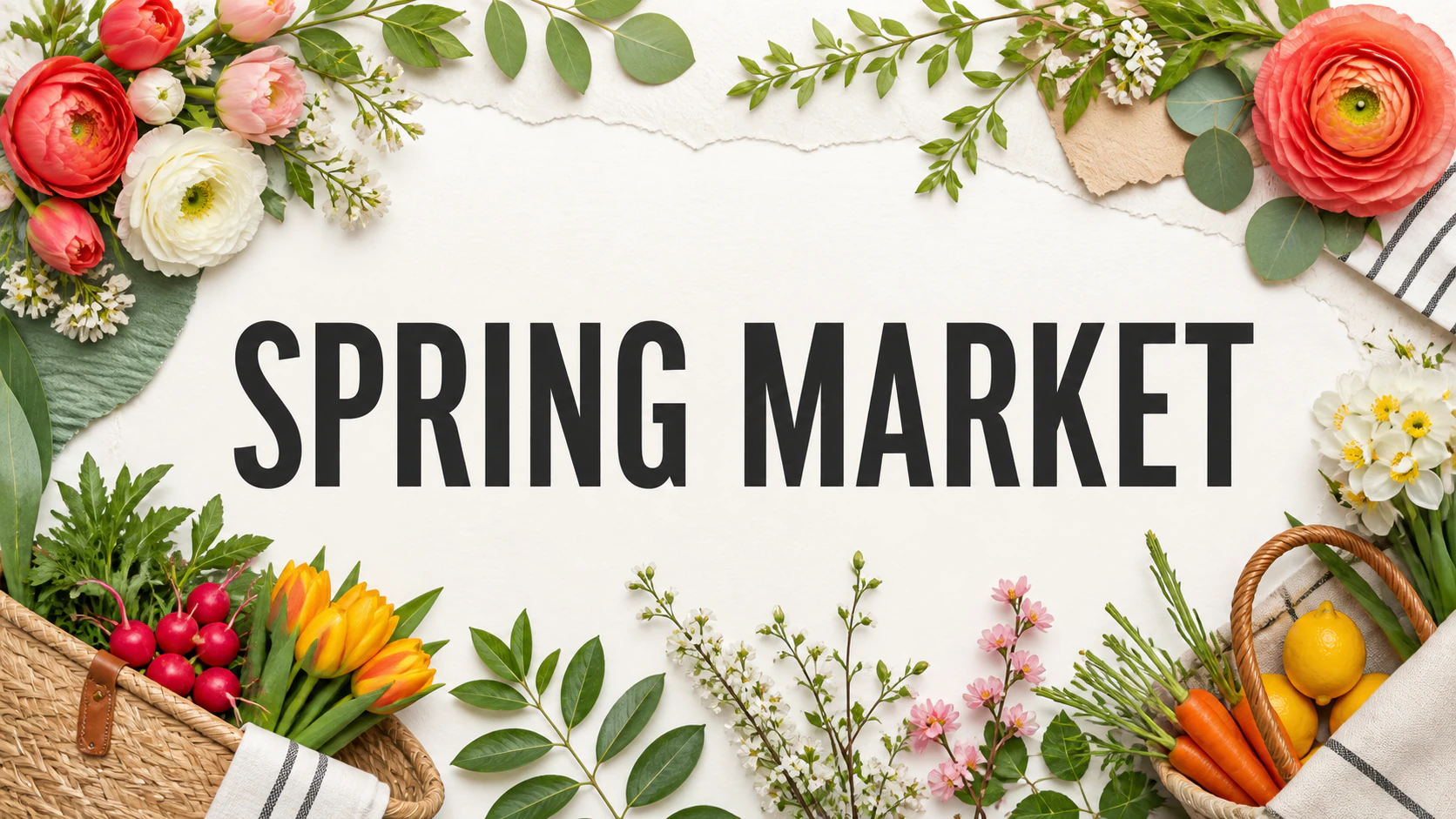

Generated with the current Image Text Editor workflow using the original uploaded poster.
Select: Choose the complete SPRING MARKET headline, including both words.
Enter: Type SUMMER MARKET in the replacement field. Enter only this wording, without quotation marks or editing instructions.
Check: Read every letter of SUMMER MARKET, check the spacing and any remaining old letter strokes, then compare the nearby paper texture and flowers with the original.
The result is a flattened image, not an editable text layer. Results vary with image quality, text style, background complexity, and model output.
Common contained changes
Correct a misspelled word or an incorrect number without rebuilding the complete visual.
Replace an outdated campaign headline, event title, announcement, or short promotional message.
Update a date or time in your own poster, event graphic, social image, or marketing asset.
Change a button label, dashboard heading, menu item, or annotation in a screenshot or interface mockup.
Change a product label, short benefit, price, or campaign message. For ecommerce-specific workflows, use the dedicated product photo editor.
Reuse a finished visual by replacing one contained text block while keeping the rest of the approved design as the visual reference.
Four-step workflow
Upload the clearest JPG, PNG, or WebP version available. Higher-resolution sources usually provide sharper letter boundaries and more surrounding detail.
Wait for visible text to be detected, then select the complete text block you want to change.
Type only the text that should appear in the final image. A replacement with similar length is generally easier to fit into the existing visual area.
Generate the edited image, compare it with the original, check every character and nearby detail, then download the flattened PNG.
Source and review quality
Upload the largest practical version instead of a compressed thumbnail or a screenshot copied through several apps.
Include the full word, headline, label, date, or sentence that should be replaced.
A replacement that is much longer than the original may create different line breaks, scale, or spacing.
Check spelling, typography, placement, background repair, nearby logos, borders, shadows, and small visual details before publishing.
Flattened output
Image Text Editor creates a new flattened image. The replacement is not returned as a separate editable text layer, and the downloaded PNG does not include controls for changing the font, size, color, or position afterward.
Use the before-and-after comparison to review the generated result before downloading. When a project requires reusable text layers, exact font files, broad layout changes, or detailed manual control, return to the original Canva, Figma, Photoshop, or other design file.
Know before you edit
Results are most consistent when the original text is sharp, readable, and clearly separated from the surrounding background. Very small lettering, curved text, reflective surfaces, dense labels, strong perspective, complex textures, and long replacements can be less predictable.
The image model can misspell the new wording, leave traces of the original letters, or change nearby details. The current workflow focuses on one selected text block per generation, so separate text areas should be handled and reviewed one at a time.
Only upload and edit images you own or have permission to modify.
Image text editing questions
Yes. Upload the image, select one detected text block, enter the replacement, and generate a new flattened result. The tool does not require an editable text layer in the original file.
No. The workflow is intended for finished JPG, PNG, and WebP images when the original editable design file is unavailable. When you still have the source file, editing there usually provides more precise control.
The editor accepts JPG, PNG, and WebP images up to 12 MB.
The editor uses the visible lettering and surrounding design as visual references. Because a finished image does not contain the original font file, an exact font match cannot be guaranteed.
The current workflow targets one selected text block per generation. For separate headlines, labels, or captions, complete and review each change one at a time.
No. The result is a flattened image rather than an editable text layer. Review the generated result before downloading, and use the original design file when manual typography or layout control is required.
Eligible new accounts receive 1 free credit, available for one Standard 1K result, plus capacity for 3 image scans. Paid one-time credit packs start at $4.99 for 12 credits.
Original uploads are stored privately for up to 24 hours. Completed flattened results and related private diagnostics are kept for up to 7 days unless you delete them sooner. Your uploaded image and relevant text instructions are sent to the providers needed to perform the edit. Read the Privacy Policy.
Start with the finished image
Upload a finished image, select one text block, enter the new wording, and review the flattened result before downloading.
Upload an Image to Edit